How does it work?
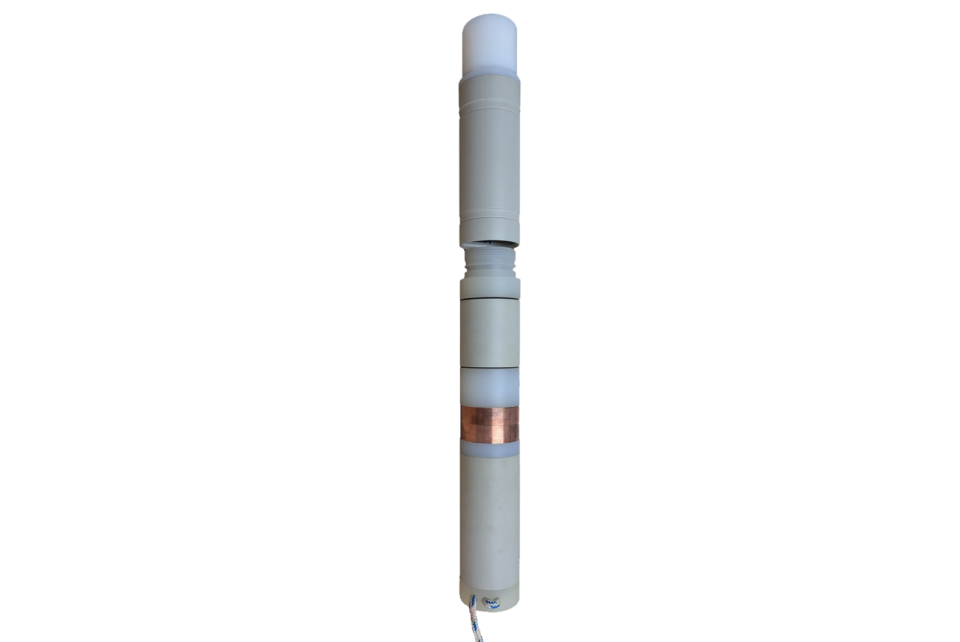
The Acoustic Release ('AR') is an alternative lid for F-PODs that are AR-enabled.
It connects via a lead to the F-POD electronics.
The F-POD is carrying out detailed sound analysis all the time and AR-enabled PODs can detect their individual acoustic tone sequence that you send from a transmitting deck unit.
The release then fires and allows the POD to float up to the surface on a retrieval line with a breaking strain of about 130kg.
Three line canister options are available: short (up to 60m of line), medium (up to 120m of line) and long (up to 180m of line).
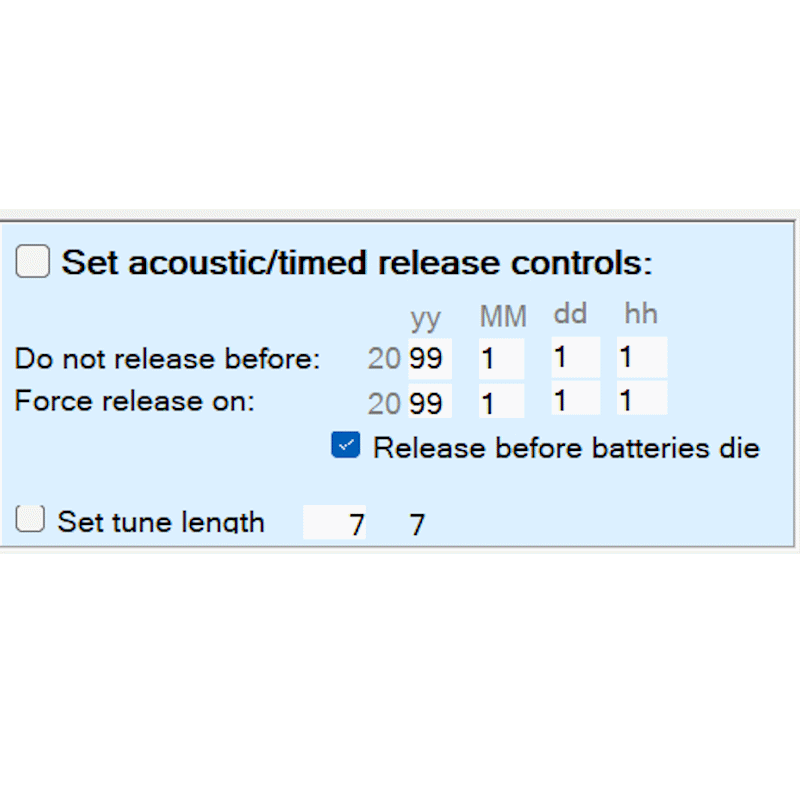
A force-release-on time can be for any hour in the future. This can be combined with logging only during certain months; logging only a set fraction of minutes; and postponing the start to a future time which could be more than a year ahead.
As well as reading the user guide linked to below please also watch these short but essential videos: Essential guidance video tutorials
We also have a quick guide on what to do and not to do when setting up and operating the acoustic release: Quick guide
Deck unit
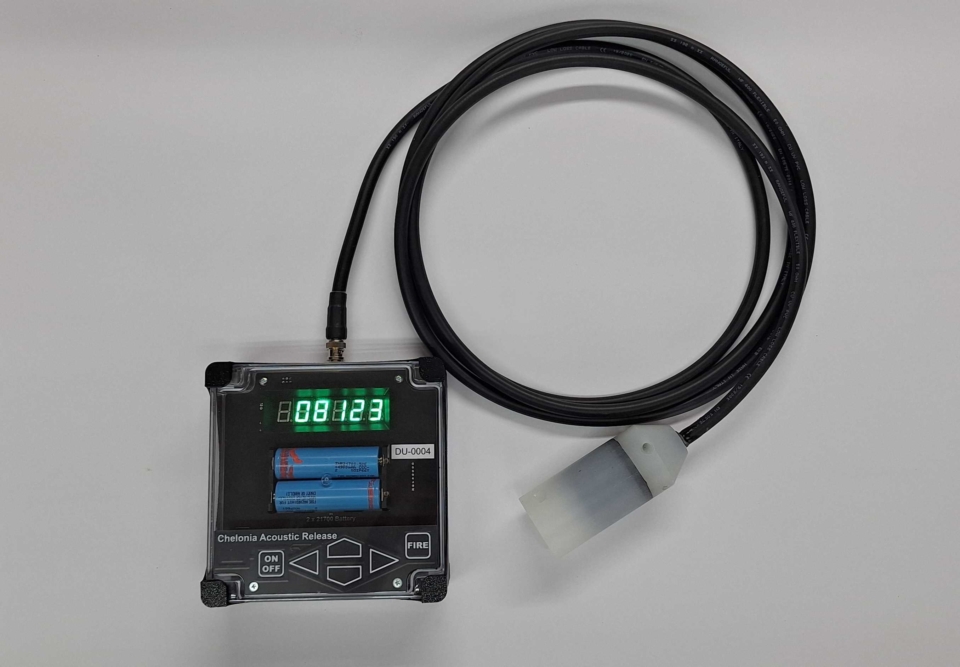
The deck unit consists of a waterproof handset and an LED numerical display with a simple keypad that allows you to enter the 4 digit serial number of the FPOD to be released. A small transmitter hydrophone is attached to the handset via a rugged coaxial cable.
The deck unit is powered by two rechargeable lithium 21700 cells which you would need to source yourself. We recommend the Samsung 50E plus a suitable charger. These are the same cells that would be used in a FPOD R25.
Batteries
The AR has two rechargeable lithium 9v PP9 cells within it. These drive the motor when release is required. Their voltage can be checked with a voltmeter when the AR is taken off the POD. They will typically power the process for 5 - 10 years between charges.
The batteries for the acoustic code detection are those in the main POD housing as the detection process runs in parallel with the click processing algorithm.
Barnacles / mussels / 'bio-fouling'
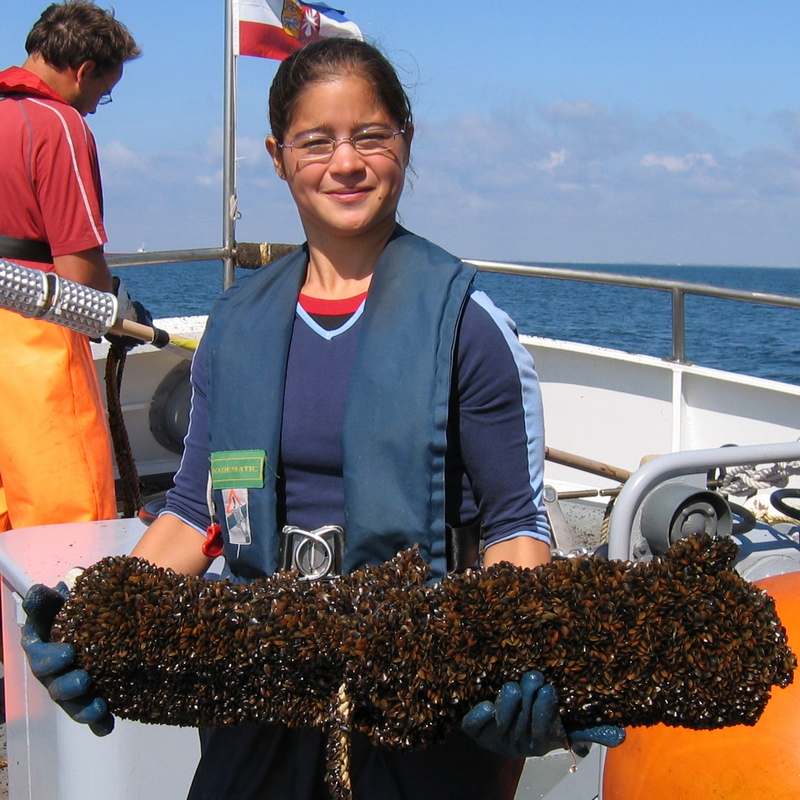
In waters where bio-fouling is rapid acoustic releases can fail as a result of the long deployment times typical of POD deployments.
So the F-POD AR is designed to keep the release mechanism free of fouling and to ensure that mussels cannot bridge the components that need to move apart when the AR releases.
Applications
The acoustic release is designed to enable low-cost long-term cetacean monitoring, but you may have ideas of different applications and some ideas on those are here.